
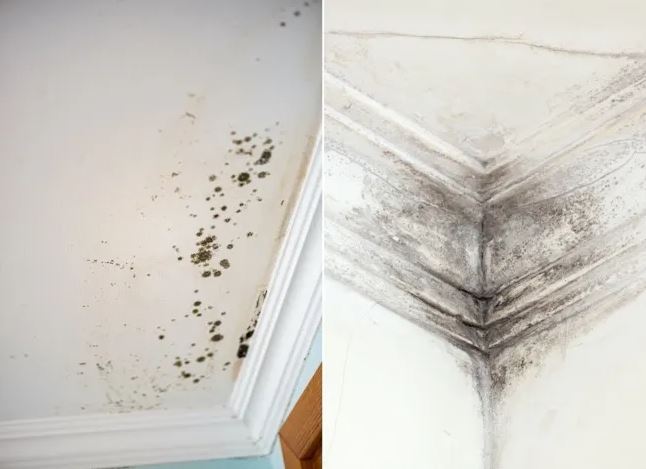
What Is Mildew?
Mildew is a surface fungus that typically appears as:
– Thin, powdery, or fluffy
– White, gray, or yellow in color
– Growing on moist, warm surfaces like showers, bathroom walls, and windowsills
It’s common in bathrooms and kitchens but usually easy to clean with household products.
Is mildew dangerous?
Not usually. It can cause mild respiratory irritation, especially in people with asthma or allergies, but it doesn’t usually penetrate deep into materials or spread rapidly.
What Is Mold?
Mold is a broader category of fungi that includes many species, including harmful ones like black mold (Stachybotrys).
Common signs of mold include:
– Dark green, brown, or black patches
– A fuzzy or slimy texture
– Strong musty odor
– Growth on drywall, wood, insulation, grout, and ceilings
Mold tends to grow deeper into porous materials and requires professional remediation when it spreads beyond surface-level.
Is mold dangerous?
Yes, especially for children, elderly individuals, or those with compromised immune systems. Prolonged exposure can cause chronic coughing, skin irritation, headaches, and serious respiratory problems.
Mold vs. Mildew: Quick Comparison
Feature | Mildew | Mold
Color | White, gray, yellow | Black, green, brown
Texture | Powdery, fluffy | Fuzzy, slimy
Smell | Mild, damp | Strong, musty
Location | Surface of tiles, windows | Deep in walls, wood, drywall
Health Risk | Low to moderate | Moderate to severe
Ease of Removal | Easy with household cleaner | Requires professional help
When to Call a Professional Mold Remediation Company
You should contact a licensed restoration team like Pristine Restoration if:
– The mold covers more than 10 square feet
– You notice recurring growth even after cleaning
– Mold has penetrated drywall, flooring, or ceilings
– You detect black mold (dark, slimy, musty-smelling patches)
– You or your family experience allergy symptoms indoors
We serve homeowners across Providence, Warwick, Cranston, Woonsocket, and all of Rhode Island.
Call (401) 313-3506 for a professional mold inspection or estimate.
How to Prevent Mold and Mildew in the Bathroom
– Install or upgrade your exhaust fan
– Use a dehumidifier or keep humidity below 50%
– Fix plumbing leaks or dripping faucets
– Reseal grout lines and caulk around tubs and sinks
– Keep shower doors or curtains open to dry after use
Final Thought: Don’t Guess — Get an Expert Opinion
If you’re unsure whether you’re dealing with mold or mildew, don’t risk your health. A quick inspection can save you time, stress, and expensive repairs down the line.
Pristine Restoration provides mold inspections, safe remediation, and moisture control solutions to protect your home and family.
Call (401) 313-3506 today to schedule service anywhere in Rhode Island.